Why We Created the Kindred Club
It's time to build a new paradigm.
Note: This is a longer one. More of an essay about the status quo, but hopefully a thorough explanation of where the vision for Kindred came from. I hope it's worth the read, because it felt worthwhile to write it; to pose the questions and entertain what's possible.
Thanks for being here! – Nick
Should've, would've, could've – the type of thoughts or words wringing with regret. The time we set aside to take stock of a life previously lived, feeling the full weight of our should've, would've, or could've moments. It's never a good feeling.
When I consider the time we each spend online trying to make a name for ourselves, or seeking professional relationships, or hoping to find help and support, it makes me wonder how often some of us have those never-good-feeling moments in our day-to-day. How often do we catch ourselves wishing we'd taken a different road or chosen a different option, or spent our time differently? If I'm honest, I find myself there several times a week. Sometimes it's just impostor syndrome (which can be overcome), but sometimes it's genuine regret and requires sincere self-assessment.
What am I doing this for? Why did I say...THAT? Does anyone care about what I have to say? Is all of this posturing a waste of time?
The world we're accustomed to doesn't make this any easier. It can have us second-guessing every decision, conversation, or post we create, as well as how we present ourselves to the world (note: additional considerations for those of us who are self-employed... where margins can be razor-thin, and any misstep may derail our small business hopes, dreams, or wallets). We are on full display to the world, after all, and somehow, somewhere, voting rights were given out to the masses. Everyone gained the perceived freedom to tell you what they think about you, your words, and your work. Everyone feels entitled to an equally weighted opinion about who you really are, how you're allowed to show up in the world, and if your voice is worth a listen. Sigh.
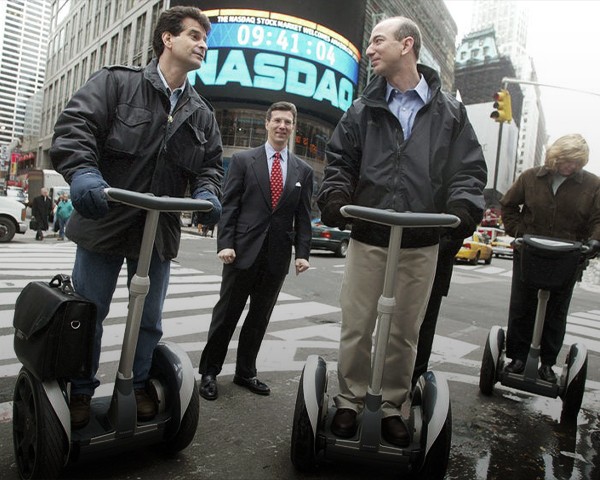
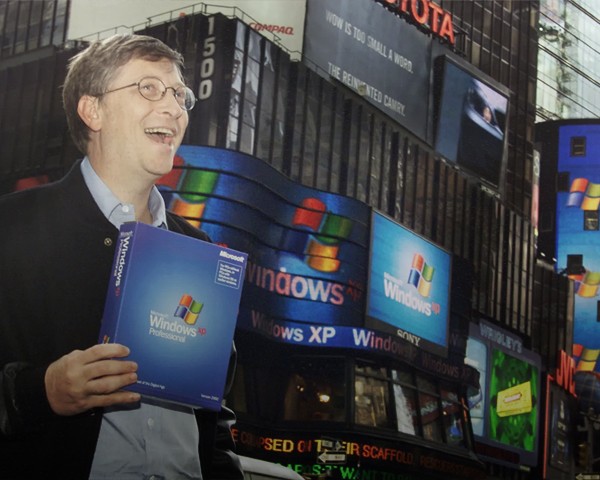
It's pretty shitty if you ask me. And it can be exhausting! BUT…it's what we signed up for, isn't it? Whether we like it or not, we ushered in this digital-first world. A world of 0s and 1s that's pulled us from the warm glow of a (vastly inferior, some would argue) existence in the Land of Analog Yesteryears. A bright LED-white future of endless possibilities...delivered to us on the silicon-laden chariots of Technological Advancement. You'll ignore the feudalistic parallels and like it! 750,000 miles of ocean-floor wiring, nonetheless! It's nearly magic!
Is it worth it?
Has the Digital Revolution been worth it? I'm not entirely sure. Personally, it's had its moments of glory for me in the past – much of early artwork and design opportunities are thanks to software and the internet. But more recently, I find myself weighing the costs of the earlier years' successes. I consider what things were like before and how the value of what they've offered might stack up against what they've taken away. And, for better or for worse, the trade-offs have been immense:
Communication: For the older crowd, we used to be stuck near a wall if we wanted to talk to someone outside our home–conversations in 20-foot circles. Now, you can speak to anyone, anywhere, however you want, all the time from your smartphone. And you get maps, email, games, and extra cool stuff! No cords either.
Visibility: There used to be this big book chock-full of numbers and addresses. If you needed to find a service provider or business, you had to look them up. And the only way to know if they did great work was to take a chance on them. Now, businesses will find you via incessant advertisements (even if you don't need their services), even if you've asked to be removed from view. But hey, that's okay, I suppose. Instead, we can trade privacy for the ability to find out how 500 (sometimes authentic, sometimes purchased) strangers feel about them before being forced to validate their work personally.
Access: In the pre-social media era, people had posters and magazines of celebrities. A few television shows each day discussed movie stars and high-profile athletes. "Personal Branding" didn't even exist for A-listers. You and I, as normal people, were virtually unknown to everyone we didn't come in contact with. That was the level of access we had in each other's lives. Now, everyone with an internet connection has Global Admission to each other. Sure, your business isn't stuck in the Yellow Pages anymore, but it also means you have to be careful not only about what you say or do, but also about how you say or do it and to whom it was said or done. I'm not talking about cancel culture…people should be held accountable. I'm talking about being misunderstood in the Court of Cult(ure), where pissing off the wrong someone may get you doxxed for fun.
Ownership: This one is less nostalgic but, in my opinion, the most poignant. In retrospect, I think history won't look very fondly on this time period, specifically for this reason: Somewhere in the mixture of the invention of social media platforms and the rise of Shitty Subscription Services for Everything™, we have transitioned from near-total life autonomy to each of us being little more than a series of data points owned by corporations, each asking us for our monthly payments. Humans– as a series of data points – that these same corporations can not only NOT keep secure or private, but also steal from. Intellectual Property willingly scraped and stolen for the benefit of the oft-lowest bidder, while a round of shrugs goes around the room of "visionaries." [Prisoner 10011100111 reporting, Tech Lords!]
There's more, but this is already overwhelming, so I'm gonna stop.
[An incredibly unsurprising premise incoming in 3, 2, 1…]
The world is different from what it once was, yes, and neither you nor I can change that. People moving fast in all directions can make it feel impossible to know which direction to head or whom you should follow. An ever-evolving digital-first world…you'll hear the rather sheepish claims to "hop on board or get left behind." You might even feel like you're losing ground by not constantly evolving yourself. But you can ignore all that. You can. I promise. Please ignore it and focus on what's right in front of you: making peace with the would've, should've, could haves, and learning to control what's controllable.
We don't control the uncontrollables, but we can control how we respond to the ever-changing environment we exist in. That is the very point at which change begins, and growth can happen. So we work to figure out what we can control and what we can't. And we decide if "more of everything" is better or worse for us than "the right amount of a specific set of things."
When we consider the need to measure this balance, it seems natural to constantly reflect on what we can master; what we should/would/could have done or said differently. There will be days when you question everything and feel regret. But how often do you also spend too much time considering the things you can't control? And where do you find yourself when framing these questions against the things you can't control? Your environment, life/career circumstances, or the ever-shifting, often-crumbling social constructs you previously agreed to? That's where paralysis by analysis happens, and growth stagnates.
How did we get here and where do we go next?
If you've found your way here and made it this far, I sincerely appreciate you. It means there's a very good chance that, at some point, you took a brave leap of faith into the "great unknown" of entrepreneurship. And an equally good chance you did so precisely because of the digital world we find ourselves in. And now you're most likely asking the same questions and searching for similar answers.
For nearly 30 years now, the internet and social media platforms have introduced and proven viable ways to create successful, online, remote-first businesses. Escape hatches from your dead-end job, a more fluid schedule during one of life's challenging moments, or a route to fulfilling your less-than-mainstream set of values, hopes, or dreams.
Given the less-than-promising job results of the last two years' hiring circus, it's no wonder so many creative professionals are eyeing the attractive qualities of self-employment or freelancing. Coupled with access to free or affordable online education, networking, and sales and marketing tools, creative professionals, especially, see a path forward as their own bosses, now more than ever.
This is the perfect time to reconsider where we started: the Should've, Would've, Could've scenarios. Those words and the sentiments they carry can be powerful, even dangerous. Steeped in unspoken expectations, we might make less-than-desirable decisions based on our beliefs of what should've been, how something would've gone, or how we could've handled things differently.
And based on our lived experiences, the 'Promises of a Technological Age' (my emphasis)…this small-business-as-a-creative-person path should continue to work, shouldn't it? It seemed to be working for quite a while. And nothing has changed in that regard: the world is still at our disposal, right? Between the internet's immediate and global reach, the accessibility of social media platforms, and the power of the supercomputer phone in each of our pockets, we should have unending opportunities to reach customers, complete flexibility in how we choose to serve them, and access to meaningful professional networks and communities we join online. If you bought into a connected world? It would surely bring you incredible value, make your life easier, and make success inevitable. That was the promise before, and still the one many cling to today.
There's a problem, though. It's a monolithic system, frequently sold as the one that works for us and with us. A system that could make us wealthy and influential…if we do it their way. That's the Would've, Should've, Could've scenario the Great Internet Technofathers promised many years ago, but I'm not so sure what once worked will remain effective moving forward. Why? Because it's starting to feel like these systems are actively working against us. I think many of us are realizing that the value of the trade-offs is dwindling. Rapidly.
2026: Growth will happen in communities again
It's time to build a new paradigm. Less trade-offs, more value. In a world of "should've, would've, and could 'ves," the Kindred club is my hope; a spark. One tiny invitation to a community of people just like you and me, who can fan the flames of growth and progress...by searching for genuine connections, real opportunities, and a chance to make a difference in the way the world and each other value self-employment, artistry, craftsmanship, and creative professions. A chance to build a different future than the one promised, the one on a collision course with unmet expectations and probable regrets.
I selected the name 'Kindred' because it embodies the remedy for so many of today's "should 'ves, would 'ves, and could 'ves" – deep, thoughtful connections between people of shared values, perspectives, and interests. I sincerely believe there's an opportunity here to craft a new story. A story built by passionate, influential artists, creators, and entrepreneurs.
A wise person once said, "The whole is greater than the sum of the parts." In that spirit, this club belongs to you as much as it does to every other member and me. As seasoned small business owners crafting our individual futures, the hope for Kindred is that you choose to share your unique perspective with other like-minded members; that your lived experiences help shape critical, yet constructive and considerate, discussions that lead to a better, brighter collective future.
Please consider joining.
We need you.
Genuine, intentional, and beneficial community shouldn't be counter-cultural. Join as a Founding Member and have a pivotal role in influencing how Kindred evolves to support a growing community. I look forward to seeing you there.
Why We Created the Kindred Club
It's time to build a new paradigm.
Note: This is a longer one. More of an essay about the status quo, but hopefully a thorough explanation of where the vision for Kindred came from. I hope it's worth the read, because it felt worthwhile to write it; to pose the questions and entertain what's possible.
Thanks for being here! – Nick
Should've, would've, could've – the type of thoughts or words wringing with regret. The time we set aside to take stock of a life previously lived, feeling the full weight of our should've, would've, or could've moments. It's never a good feeling.
When I consider the time we each spend online trying to make a name for ourselves, or seeking professional relationships, or hoping to find help and support, it makes me wonder how often some of us have those never-good-feeling moments in our day-to-day. How often do we catch ourselves wishing we'd taken a different road or chosen a different option, or spent our time differently? If I'm honest, I find myself there several times a week. Sometimes it's just impostor syndrome (which can be overcome), but sometimes it's genuine regret and requires sincere self-assessment.
What am I doing this for? Why did I say...THAT? Does anyone care about what I have to say? Is all of this posturing a waste of time?
The world we're accustomed to doesn't make this any easier. It can have us second-guessing every decision, conversation, or post we create, as well as how we present ourselves to the world (note: additional considerations for those of us who are self-employed... where margins can be razor-thin, and any misstep may derail our small business hopes, dreams, or wallets). We are on full display to the world, after all, and somehow, somewhere, voting rights were given out to the masses. Everyone gained the perceived freedom to tell you what they think about you, your words, and your work. Everyone feels entitled to an equally weighted opinion about who you really are, how you're allowed to show up in the world, and if your voice is worth a listen. Sigh.
It's pretty shitty if you ask me. And it can be exhausting! BUT…it's what we signed up for, isn't it? Whether we like it or not, we ushered in this digital-first world. A world of 0s and 1s that's pulled us from the warm glow of a (vastly inferior, some would argue) existence in the Land of Analog Yesteryears. A bright LED-white future of endless possibilities...delivered to us on the silicon-laden chariots of Technological Advancement. You'll ignore the feudalistic parallels and like it! 750,000 miles of ocean-floor wiring, nonetheless! It's nearly magic!
Is it worth it?
Has the Digital Revolution been worth it? I'm not entirely sure. Personally, it's had its moments of glory for me in the past – much of early artwork and design opportunities are thanks to software and the internet. But more recently, I find myself weighing the costs of the earlier years' successes. I consider what things were like before and how the value of what they've offered might stack up against what they've taken away. And, for better or for worse, the trade-offs have been immense:
Communication: For the older crowd, we used to be stuck near a wall if we wanted to talk to someone outside our home–conversations in 20-foot circles. Now, you can speak to anyone, anywhere, however you want, all the time from your smartphone. And you get maps, email, games, and extra cool stuff! No cords either.
Visibility: There used to be this big book chock-full of numbers and addresses. If you needed to find a service provider or business, you had to look them up. And the only way to know if they did great work was to take a chance on them. Now, businesses will find you via incessant advertisements (even if you don't need their services), even if you've asked to be removed from view. But hey, that's okay, I suppose. Instead, we can trade privacy for the ability to find out how 500 (sometimes authentic, sometimes purchased) strangers feel about them before being forced to validate their work personally.
Access: In the pre-social media era, people had posters and magazines of celebrities. A few television shows each day discussed movie stars and high-profile athletes. "Personal Branding" didn't even exist for A-listers. You and I, as normal people, were virtually unknown to everyone we didn't come in contact with. That was the level of access we had in each other's lives. Now, everyone with an internet connection has Global Admission to each other. Sure, your business isn't stuck in the Yellow Pages anymore, but it also means you have to be careful not only about what you say or do, but also about how you say or do it and to whom it was said or done. I'm not talking about cancel culture…people should be held accountable. I'm talking about being misunderstood in the Court of Cult(ure), where pissing off the wrong someone may get you doxxed for fun.
Ownership: This one is less nostalgic but, in my opinion, the most poignant. In retrospect, I think history won't look very fondly on this time period, specifically for this reason: Somewhere in the mixture of the invention of social media platforms and the rise of Shitty Subscription Services for Everything™, we have transitioned from near-total life autonomy to each of us being little more than a series of data points owned by corporations, each asking us for our monthly payments. Humans– as a series of data points – that these same corporations can not only NOT keep secure or private, but also steal from. Intellectual Property willingly scraped and stolen for the benefit of the oft-lowest bidder, while a round of shrugs goes around the room of "visionaries." [Prisoner 10011100111 reporting, Tech Lords!]
There's more, but this is already overwhelming, so I'm gonna stop.
[An incredibly unsurprising premise incoming in 3, 2, 1…]
The world is different from what it once was, yes, and neither you nor I can change that. People moving fast in all directions can make it feel impossible to know which direction to head or whom you should follow. An ever-evolving digital-first world…you'll hear the rather sheepish claims to "hop on board or get left behind." You might even feel like you're losing ground by not constantly evolving yourself. But you can ignore all that. You can. I promise. Please ignore it and focus on what's right in front of you: making peace with the would've, should've, could haves, and learning to control what's controllable.
We don't control the uncontrollables, but we can control how we respond to the ever-changing environment we exist in. That is the very point at which change begins, and growth can happen. So we work to figure out what we can control and what we can't. And we decide if "more of everything" is better or worse for us than "the right amount of a specific set of things."
When we consider the need to measure this balance, it seems natural to constantly reflect on what we can master; what we should/would/could have done or said differently. There will be days when you question everything and feel regret. But how often do you also spend too much time considering the things you can't control? And where do you find yourself when framing these questions against the things you can't control? Your environment, life/career circumstances, or the ever-shifting, often-crumbling social constructs you previously agreed to? That's where paralysis by analysis happens, and growth stagnates.
How did we get here and where do we go next?
If you've found your way here and made it this far, I sincerely appreciate you. It means there's a very good chance that, at some point, you took a brave leap of faith into the "great unknown" of entrepreneurship. And an equally good chance you did so precisely because of the digital world we find ourselves in. And now you're most likely asking the same questions and searching for similar answers.
For nearly 30 years now, the internet and social media platforms have introduced and proven viable ways to create successful, online, remote-first businesses. Escape hatches from your dead-end job, a more fluid schedule during one of life's challenging moments, or a route to fulfilling your less-than-mainstream set of values, hopes, or dreams.
Given the less-than-promising job results of the last two years' hiring circus, it's no wonder so many creative professionals are eyeing the attractive qualities of self-employment or freelancing. Coupled with access to free or affordable online education, networking, and sales and marketing tools, creative professionals, especially, see a path forward as their own bosses, now more than ever.
This is the perfect time to reconsider where we started: the Should've, Would've, Could've scenarios. Those words and the sentiments they carry can be powerful, even dangerous. Steeped in unspoken expectations, we might make less-than-desirable decisions based on our beliefs of what should've been, how something would've gone, or how we could've handled things differently.
And based on our lived experiences, the 'Promises of a Technological Age' (my emphasis)…this small-business-as-a-creative-person path should continue to work, shouldn't it? It seemed to be working for quite a while. And nothing has changed in that regard: the world is still at our disposal, right? Between the internet's immediate and global reach, the accessibility of social media platforms, and the power of the supercomputer phone in each of our pockets, we should have unending opportunities to reach customers, complete flexibility in how we choose to serve them, and access to meaningful professional networks and communities we join online. If you bought into a connected world? It would surely bring you incredible value, make your life easier, and make success inevitable. That was the promise before, and still the one many cling to today.
There's a problem, though. It's a monolithic system, frequently sold as the one that works for us and with us. A system that could make us wealthy and influential…if we do it their way. That's the Would've, Should've, Could've scenario the Great Internet Technofathers promised many years ago, but I'm not so sure what once worked will remain effective moving forward. Why? Because it's starting to feel like these systems are actively working against us. I think many of us are realizing that the value of the trade-offs is dwindling. Rapidly.
2026: Growth will happen in communities again
It's time to build a new paradigm. Less trade-offs, more value. In a world of "should've, would've, and could 'ves," the Kindred club is my hope; a spark. One tiny invitation to a community of people just like you and me, who can fan the flames of growth and progress...by searching for genuine connections, real opportunities, and a chance to make a difference in the way the world and each other value self-employment, artistry, craftsmanship, and creative professions. A chance to build a different future than the one promised, the one on a collision course with unmet expectations and probable regrets.
I selected the name 'Kindred' because it embodies the remedy for so many of today's "should 'ves, would 'ves, and could 'ves" – deep, thoughtful connections between people of shared values, perspectives, and interests. I sincerely believe there's an opportunity here to craft a new story. A story built by passionate, influential artists, creators, and entrepreneurs.
A wise person once said, "The whole is greater than the sum of the parts." In that spirit, this club belongs to you as much as it does to every other member and me. As seasoned small business owners crafting our individual futures, the hope for Kindred is that you choose to share your unique perspective with other like-minded members; that your lived experiences help shape critical, yet constructive and considerate, discussions that lead to a better, brighter collective future.
Please consider joining.
We need you.
Genuine, intentional, and beneficial community shouldn't be counter-cultural. Join as a Founding Member and have a pivotal role in influencing how Kindred evolves to support a growing community. I look forward to seeing you there.